

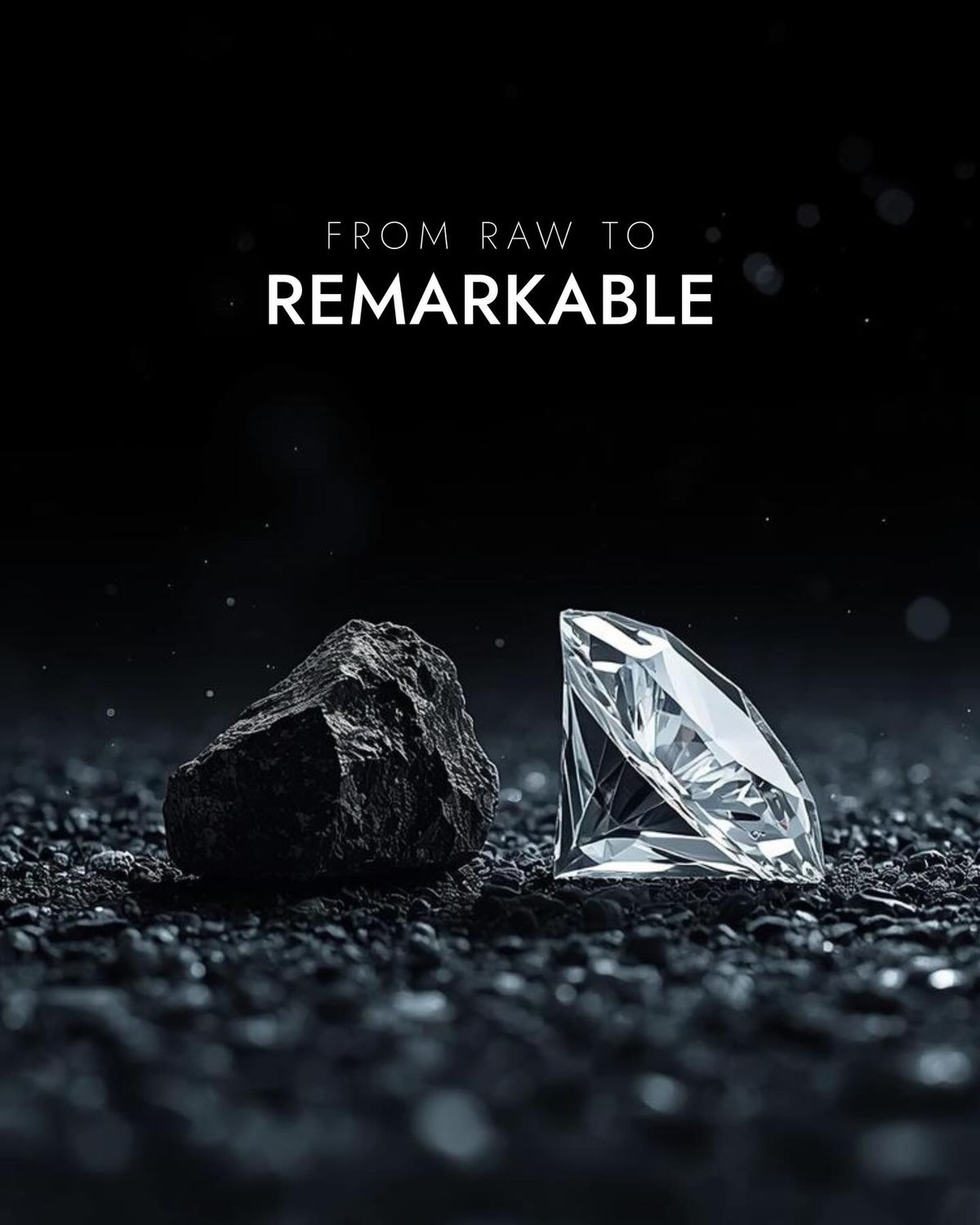
The history of Diamonds have captivated humanity for centuries. But their journey from deep within the earth to the stunning jewelry we wear today is a tale of ancient rivers, global trade routes, and nature’s raw power.
The Deep Roots: Where did the history of diamonds begin?
Long before modern underground mining, diamonds were discovered quite naturally by ancient civilizations.
- The First Discoveries: The earliest recorded diamonds were found in India, dating back over 3,000 years.
- Alluvial Deposits: They were not dug from deep pits; instead, they were washed up by streams and rivers, particularly along the Krishna and Godavari rivers.
- A Rare Treasure: For centuries, India was the world’s only known source of these precious stones, making them an incredibly rare and localized treasure.
- The most prolific and legendary source was the Golconda region in present-day Andhra Pradesh. For centuries, India held a near-monopoly on the global diamond trade. This specific region yielded some of the world’s most historically significant gems, including the infamous Koh-i-Noor, the deep-blue Hope Diamond, and the massive Great Mogul Diamond
From Rough Stones to Royal Gems: How Were They Recognized?
Ancient people did not have modern cutting tools, meaning early diamonds looked like cloudy pebbles rather than faceted gems.
The Ultimate Hardness: They were first recognized for their unmatched strength. The word “diamond” comes from the Greek adamas, meaning “unbreakable.”
Talismans of Power: Because they could scratch any other material and survive fire, ancient kings wore them in battle as protective talismans.
Natural Perfection: Early collectors highly prized stones that naturally formed in perfect, unblemished eight-sided crystals (octahedrons).
A Treasury of Precious Stones
While diamonds were the ultimate symbol of invincibility, ancient Indian royals and traders amassed a breathtaking variety of other precious stones, creating jewellery that served as both currency and spiritual talismans:
- Rubies & Spinels: Known historically as “balas rubies,” these blood-red stones symbolized life, youth, and power. They were sourced from Sri Lanka and the mountains of Badakhshan.
- Sapphires: South India and nearby Sri Lanka produced magnificent sapphires. Yellow sapphires were highly sought after for promising wealth and health, while blue sapphires were often handled with caution due to their potent astrological links.
- Pearls: Divers in the Gulf of Mannar were renowned for retrieving exquisite natural pearls, which were strung into elaborate wedding necklaces and royal garments.
- Emeralds: Though the finest emeralds were often imported from places like Colombia by the Mughal era, they were central to Indian jewelry and were masterfully carved and set into spectacular creations like the fabled Peacock Throne.
Pre-Invasion Indigenous Treasures
Before foreign trade routes expanded during the medieval invasions, ancient Indian royals and temples amassed an incredible variety of native and locally traded gemstones:
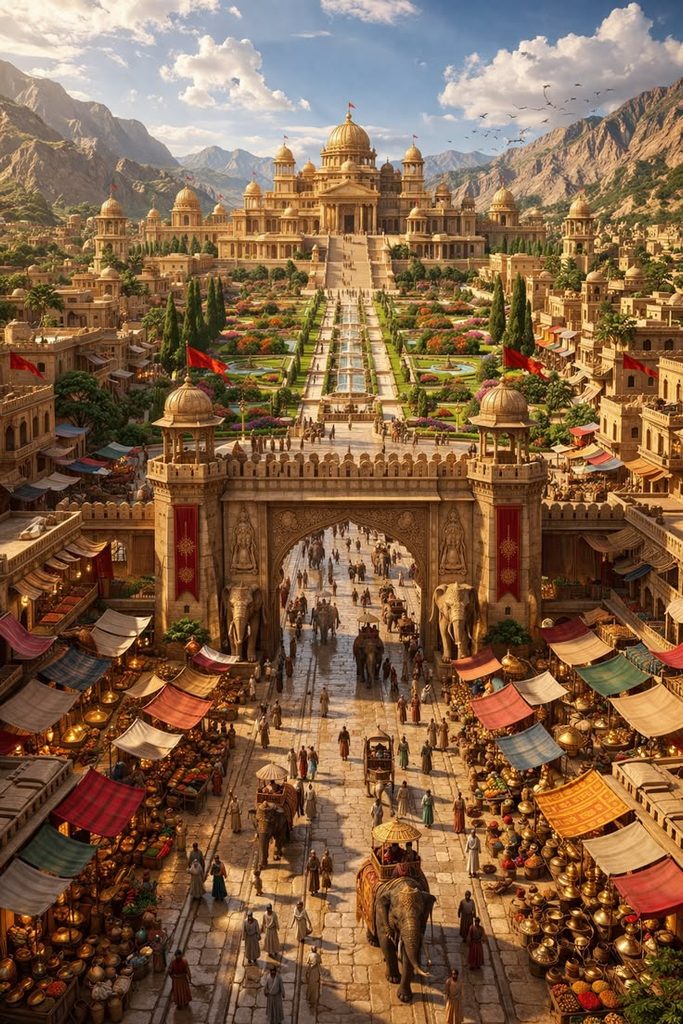
- Uncut Diamonds: Mined directly from the Krishna and Godavari riverbeds, these rough, unpolished octahedrons (later known as Polki) were the ultimate symbol of power.
- Oceanic Pearls: Divers in the Gulf of Mannar retrieved exquisite natural pearls, which were strung into elaborate royal garments and temple adornments.
- Rubies & Sapphires: Sourced from neighboring Sri Lanka and the mountains of Badakhshan, these were heavily utilized for their deep astrological and spiritual significance.
The Rajputs: Pioneers of Royal Grandeur
While Rajput history intertwines with the Mughals later on, their royal lineage and jewelry traditions began centuries earlier. They pioneered styles that emphasized bold, unyielding grandeur:
- Jadau & Polki: Rajput artisans mastered the art of embedding uncut diamonds and precious stones directly into pure gold without adhesives.
- Kundan Roots: Though refined during the medieval period, the early techniques of setting gems in pure 24-karat gold foil originated in the royal courts of Rajputana and Gujarat.
The Maratha Empire: The Peshwai Opulence
The Maratha Empire actually rose to prominence in the 17th century, challenging and eventually outlasting the Mughals). However, their immense wealth and distinctive Peshwai jewellery represent a pinnacle of indigenous royal opulence:
- The Iconic Nath: A signature nose ring woven intricately with pearls and a central ruby or emerald.
- Thushi & Kolhapuri Saaj: Choker-style necklaces made of tightly strung gold beads and ornate pendants steeped in religious symbolism.
- Pearls over Diamonds: While they had access to diamonds, Maratha royals distinctly favored the purity and elegance of pearls combined with solid gold.
The Sparkle Travels: How Were They Traded?
As the allure of these indestructible stones grew, so did the global desire to acquire them.
- The Silk Road: Diamonds traveled from India to China, the Middle East, and eventually Europe along ancient, bustling trade networks.
- Venetian Merchants: By the 1400s, Venice had become the central hub for the diamond trade, introducing the gems to European nobility.
- A Symbol of Love: In 1477, Archduke Maximilian of Austria commissioned the very first diamond engagement ring, forever cementing the stone’s legacy in romance.
The Vast Expanse & Epicenters of Trade
The famous Silk Road was not a single paved road, but a massive, complex network of interconnected routes stretching over 4,000 miles (6,400 kilometers) from East Asia all the way to the Mediterranean Sea.
- Major Trade Hubs: The route was anchored by monumental cities that acted as global bazaars. Key centers included Chang’an (modern-day Xi’an) in China, the breathtaking oasis cities of Samarkand and Bukhara in Central Asia, Baghdad in the Middle East, and Constantinople (Istanbul), which served as the gateway to Europe and Venice.
The Great Gemstone Exchange
While silk gave the route its name, it was a bustling superhighway for the world’s most spectacular geological treasures:
- From India: Uncut diamonds from Golconda, vibrant Sri Lankan sapphires, and oceanic pearls traveled westward.
- From Afghanistan (Badakhshan): Deep blue lapis lazuli and blood-red “balas rubies” (spinels) were highly prized by royals everywhere.
- From China: Exquisite jade, valued for its beauty and spiritual significance, moved outward.
- From Persia: Traders brought rich, sky-blue turquoise to exchange for Indian and Chinese goods.
Life on the Trail: Transport & Caravans
Surviving the harsh deserts of the Taklamakan and the treacherous mountain passes of the Pamirs required immense resilience and strategic planning.
- Mode of Transport: Merchants primarily relied on two-humped Bactrian camels, which could carry up to 400 pounds of heavy cargo across arid terrain with very little water. Horses, mules, and yaks were utilized in the steeper, colder regions.
- Safety in Numbers: To protect their immense wealth from bandits and extreme weather, merchants rarely traveled alone. They formed massive caravans, often consisting of 100 to over 1,000 camels, accompanied by armed guards, guides, and dozens of international traders.
Travel Timelines: A Journey in Relays
Very few merchants ever traveled the entire 4,000-mile stretch; it was simply too long and perilous.
- The Relay System: Goods were traded in segments, passed from middleman to middleman at various caravanserai (roadside inns).
- Duration: If a merchant or specific gemstone traveled end-to-end, the journey could take anywhere from 1 to 2 years. Shorter segments between major oasis cities, however, might take a few weeks to a couple of months depending on the weather.
Masters of Concealment: Hiding Wealth on the Silk Road
Traveling for months across treacherous terrains with a fortune in diamonds was a massive risk. Highwaymen, bandits, and corrupt officials constantly stalked the caravan routes. To protect their precious cargo, ancient Indian merchants developed highly ingenious—and sometimes extreme—methods of concealment.
Hiding Diamonds from Bandits The journey along the Silk Road was as perilous as it was profitable. Carrying a king’s ransom in a small pouch made merchants prime targets for desert raiders. To survive the journey, ancient traders relied on stealth and deception to hide their raw diamonds:
- Sewn into Seams: Merchants meticulously stitched rough diamonds deep into the thick hems, collars, and waistbands of their heavy travel garments. These hidden pouches were virtually undetectable during typical shakedowns.
- Hollowed-Out Equipment: Walking sticks, wooden pack saddles, and even the handles of everyday tools were cleverly hollowed out by craftsmen to create secret compartments for the most valuable stones.
- Disguised in Plain Sight: Because uncut diamonds often look like cloudy, unremarkable pebbles rather than brilliant gems, traders would sometimes mix them into massive sacks of ordinary cargo, like raw spices, grains, or dry goods.
- The Extreme Measure: For the rarest and most legendary stones, merchants were known to swallow them before entering particularly dangerous mountain passes or territories, retrieving them naturally days later once safely within the walls of a fortified caravanserai.
The Weight of Brilliance: How Were They Measured?
Before modern precision scales, early gem traders needed a reliable, standardized way to measure these tiny, valuable stones.
- The Carob Seed Connection: Ancient traders used the seeds of the carob tree as counterweights on their balance scales.
- Uniform Weight: Carob seeds were historically believed to be remarkably uniform in size and mass, making them the perfect standard for gems.
- The Birth of the Carat: This ancient practice gave us the modern metric “carat,” where one carat today equals exactly 0.2 grams.
DIAMONDS ARE FOREVER
Today, when we admire a perfectly cut diamond, we are not just looking at a beautiful piece of jewelry. We are holding a fragment of Earth’s deep history, a stone that has survived extreme geological pressure, perilous journeys across deserts, and the rise and fall of great empires. The journey of a diamond—from a cloudy pebble in an ancient stream to the sparkling centerpiece of a modern ring—is a true testament to the timeless allure of nature’s most indestructible treasure.